









A Practical Guide to Wearable Low Vision Glasses for Watching TV

Key Takeaways
- Low vision can make TV watching increasingly difficult, especially for people with AMD and other eye conditions.
- OrCam MyEye is primarily designed for AI-powered reading and object recognition, such as reading text, identifying items, and assisting with daily accessibility tasks. It is not primarily built for immersive TV or long-duration screen viewing.
- eSight GO electronic glasses provide strong visual enhancement and can support TV watching and distance viewing, but they also include advanced customization features that may require a learning period for some users.
- Acesight VR is designed specifically for comfortable TV watching, movies, and sports with a wide field of view and simple operation.
- The best solution is not always the most advanced device—but the one users can comfortably wear and enjoy every day.

Watching TV should be relaxing. Whether it’s following your favorite baseball game, enjoying a movie night with family, or catching up on the evening news, television remains an important part of daily life for many Americans.
But for people living with low vision, watching TV can become increasingly frustrating. Subtitles may look blurry. Players on the field can be hard to recognize. Faces on screen lose detail. Some people find themselves sitting only a few feet from the television just to follow what’s happening.
The good news is that today’s wearable low vision devices are creating new possibilities for comfortable television viewing. If you’re searching for the best magnifying glasses for watching TV, this guide will help you understand which solutions may fit your lifestyle and visual needs.
Why Watching TV Becomes So Frustrating with Low Vision
Many people with age-related macular degeneration (AMD), diabetic retinopathy, glaucoma, or other eye conditions experience challenges that become especially noticeable during TV viewing.
Common frustrations include:
- Difficulty reading subtitles and captions
- Trouble recognizing faces and facial expressions
- Missing details during sports broadcasts
- Eye strain from trying to focus for long periods
- Sitting unusually close to the television
- Feeling left out during family movie nights
For many visually impaired seniors, television is more than entertainment—it’s a way to stay connected with family, current events, and favorite hobbies.
When vision loss makes TV difficult to enjoy, it can also affect confidence, independence, and overall quality of life.
This is one reason why electronic glasses for low vision are becoming increasingly popular among Americans seeking practical ways to stay engaged in daily activities.
What Makes a Wearable Low Vision Device Good for TV Watching?
But with more options available than ever, how do you know which one actually works well for television? The reality is, many wearable low vision devices — even excellent ones — aren't built with television viewing as a priority.
When evaluating TV glasses for visually impaired users, several factors often matter more than flashy technology features.
1. Clear, Smooth Image Quality
Television involves constant motion. Sports games, action scenes, and live broadcasts require smooth image processing and minimal lag.
A device that works well for reading a menu may not necessarily provide a comfortable viewing experience during a three-hour football game.
2. Wide Field of View (FOV)
A larger field of view helps users see more of the screen without constantly moving their head.
This can make movies, sports, and television shows feel much more natural and immersive.
3. Long-Term Comfort
Many people watch TV for several hours at a time.
A heavy headset or uncomfortable design may become tiring quickly. Comfort often becomes one of the most important factors for long-term use.
4. Easy Operation
Many low vision seniors simply want something they can turn on and use.
Complex settings, frequent adjustments, and steep learning curves can discourage regular use.
5. Reduced Visual Fatigue
The goal isn’t just magnification.
The goal is being able to comfortably enjoy an entire movie, sporting event, or TV series without feeling exhausted afterward.
With these criteria in mind, let's look at three of the most talked-about wearable low vision solutions — OrCam MyEye, eSight GO, and Acesight VR — and how they compare when it comes to the specific task of watching TV.
OrCam MyEye: Excellent for Reading and AI Assistance, Less Focused on TV Viewing
Source: OrCam Technologies
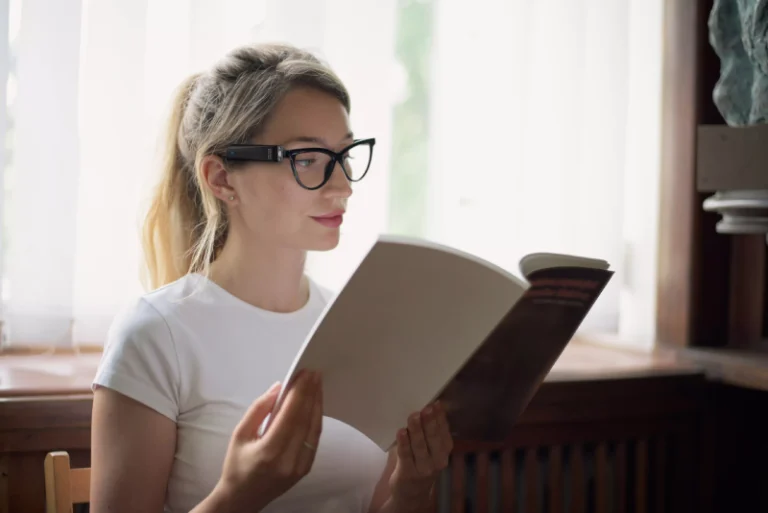
You’ve probably heard of OrCam MyEye, and rightfully so – it’s a brilliant piece of technology. Unlike eSight and Acesight VR, which enhance what you see in real time, OrCam takes a fundamentally different approach: it uses a smart camera to capture text, objects, or faces, and then reads that information aloud through a small speaker. It doesn't magnify the television screen or make images clearer — instead, it recognizes what's in front of the camera and tells you about it. OrCam MyEye represents some of the most advanced and the best ai glasses for low vision available today.
But when it comes to the specific joy of watching TV, OrCam MyEye isn’t primarily designed for that. It can read text on a screen, yet it’s not made to give you a smooth, wide, immersive view of a full-length movie or a basketball game. If reading printed materials and getting AI-powered audio descriptions is your main need, OrCam MyEye could be a wonderful match. But if you’re really missing the simple pleasure of sitting back and watching a show, you may want a device built from the ground up for that experience.
eSight GO Electronic Glasses: Powerful Vision Enhancement with a Higher Learning Curve
Source: eSight
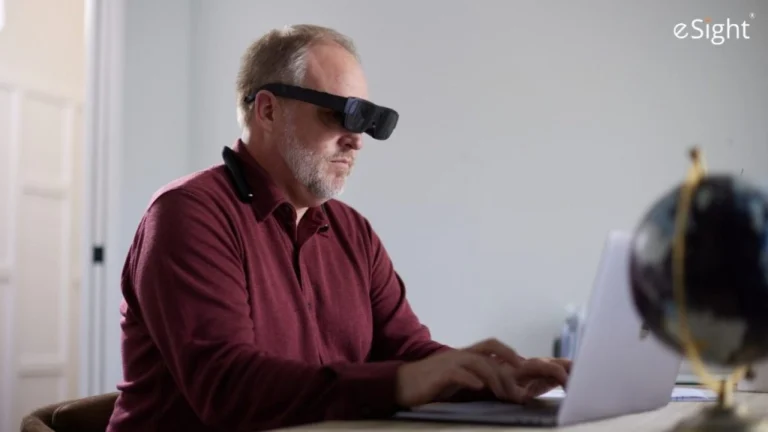
Unlike OrCam, eSight takes a different approach — it's built to enhance everything you see, including the television across the room. The eSight electronic glasses for low vision are recognized for delivering some of the most robust vision enhancement available today. The device uses high-definition OLED screens and advanced optics to produce remarkably clear, bright images, which can make faces, expressions, and distant details much easier to see. The latest eSight Go weighs approximately 170 grams and uses a neck-mounted battery design to distribute weight more evenly, making it relatively lightweight among wearable vision devices. It also features a 45° field of view, which allows users to see what is directly in front of them while still maintaining peripheral awareness. Many users value the deep level of personalization — you can fine-tune focus, contrast, and magnification to match your unique eyesight, which often creates a viewing experience that feels surprisingly natural. For someone who wants to watch TV, enjoy a movie, or even attend a live performance while also receiving strong everyday visual support, eSight offers a degree of flexibility that can be genuinely life-changing.
That said, based on user feedback, we consistently hear that this power comes with a steeper learning curve. Features like advanced focus adjustments and menu navigations are impressive, but not every visually impaired senior wants to learn a complex system just to relax in front of the TV. However, because eSight relies on a camera-based visual enhancement system, it performs best in well-lit environments where contrast and detail can be fully captured. In lower-light environments such as dimly lit cinemas, museums, or nighttime indoor settings, visual clarity and contrast may be less stable due to reduced ambient light available for the camera system. For many families exploring assistive technology devices for low vision, striking the right balance between capability, simplicity and budget is everything.
Why Comfort and Simplicity Matter More Than Ever for Low Vision Seniors
This is exactly the tension that so many families describe: the line between what a device can do and what they'll actually use.
Let’s be honest: most of us in the low vision community – and the caregivers supporting us – aren’t chasing the most futuristic tech. We’re chasing normal, wonderful, everyday moments.
Like being able to bake cookies with the grandkids while a movie plays in the background. Or watching the evening news without scooting your chair three feet from the screen. Or simply sharing a comedy special with your spouse and hearing them laugh at the same time you do.
This is why a device that feels light, comfortable, and headache-free, with controls so simple your non-tech-savvy husband can pick it up and help, becomes a true extension of your life. When you choose low vision TV glasses, the measure of success is this: did you forget you were wearing them and just enjoy the show?
Acesight VR: A Comfortable and More Affordable Option for Everyday TV Enjoyment
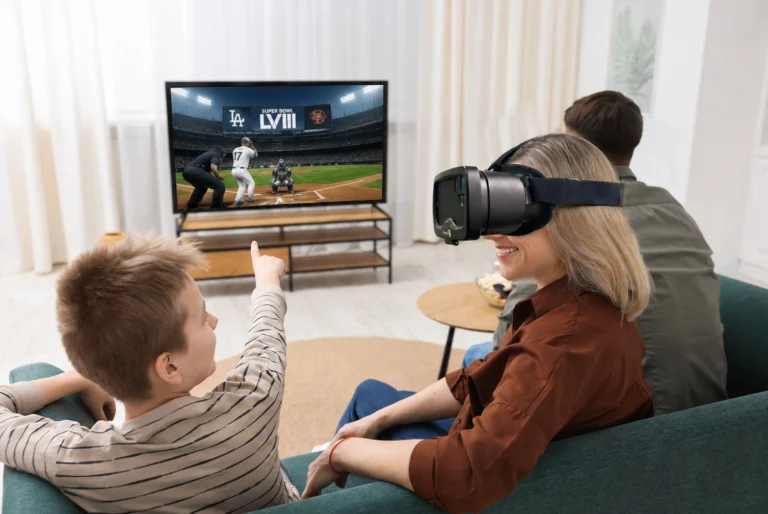
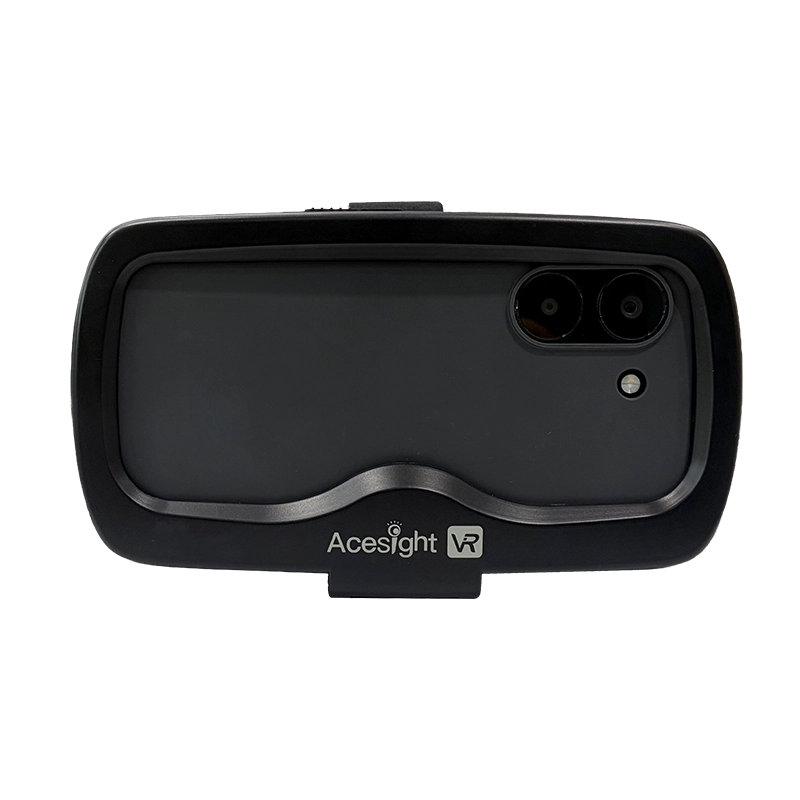
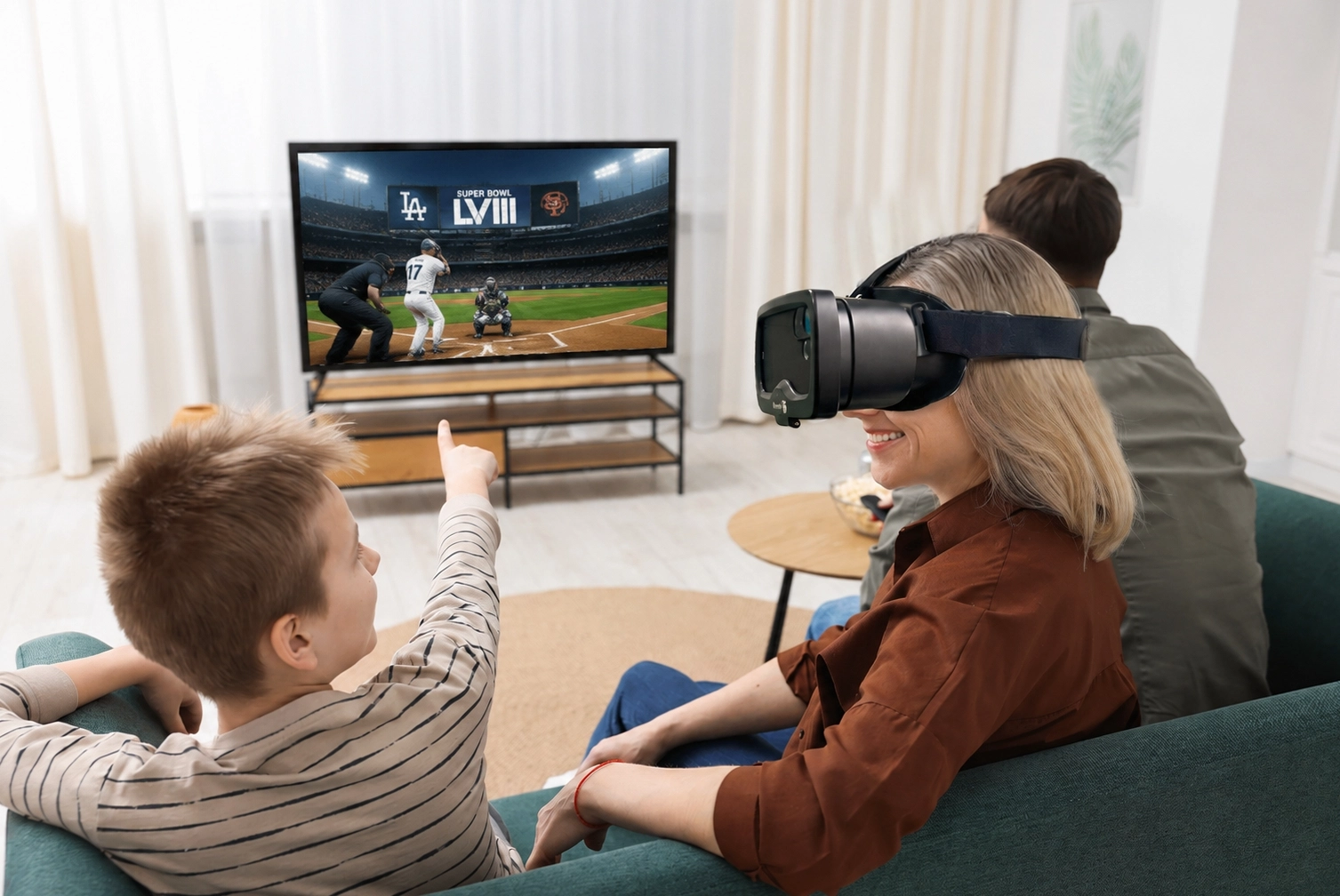
This is where the Zoomax Acesight VR steps into the picture, and we think it’s one of the most sensible options for low-vision TV lovers. Acesight VR is purpose-built for immersive, comfortable viewing right out of the box — and a big part of that comes down to its wide 65° field of view. That generous FOV wraps the scene naturally in front of you, so instead of feeling like you’re peering through a tunnel, you can settle into your favorite armchair and truly get lost in what you’re watching.
Imagine this: it’s Friday evening, you’ve got a soft blanket, a cup of tea, and you’re ready to dive into the new Netflix drama everyone’s been talking about. With Acesight VR, you’re not squinting to catch a character’s subtle smirk or missing the gorgeous landscape shots. The picture feels spacious and fluid, turning your living room into your own private cinema — even if you’re just binge-watching the latest season of Stranger Things or a feel-good rom-com. This is the kind of relaxed, movie-night joy that many thought low vision had taken away for good.
Don’t just take our word for it. Here’s what a couple of Acesight VR users have shared with us:
“I put it on, sat down with my wife, and we watched the whole Super Bowl together — something I haven’t done comfortably in years. It felt so light, I forgot I was wearing it by halftime.” – Bill R., retired auto mechanic, Ohio
“My daughter helped me set it up once, and now I can do it myself in seconds. Last week I watched an entire movie with the grandkids and actually saw their reactions. I cried happy tears.” – Linda M., retired school teacher, Arizona
Stories like these point to the same core strengths that keep surfacing in real-world use.
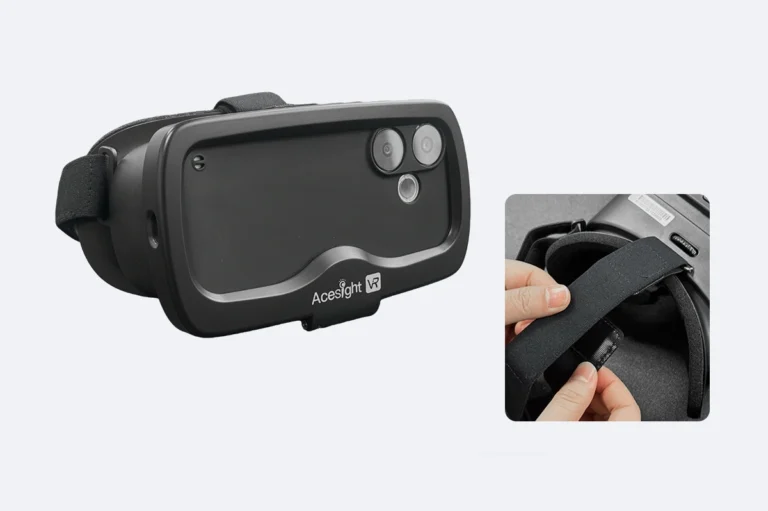
What continues to set Acesight VR apart for so many families is its “unbox-and-watch” simplicity. There’s no intimidating array of menus to wrestle with. You put it on, make a quick adjustment, and start watching. It’s thoughtfully designed so that a caregiver or family member can assist without digging out a manual — or you can simply manage it yourself. And when you’re comparing choices among low vision glasses for watching TV, Acesight VR often stands out as a friendlier-priced alternative to more complex, high-end systems.
Acesight VR
Rated 5.00 out of 5
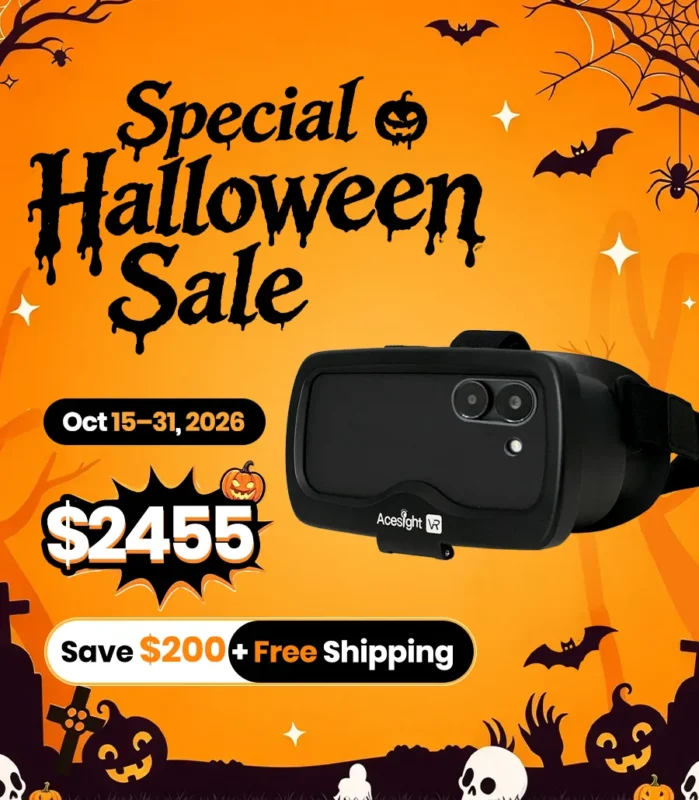
Halloween Sale · Oct 15–31
Save $200 + Free Shipping
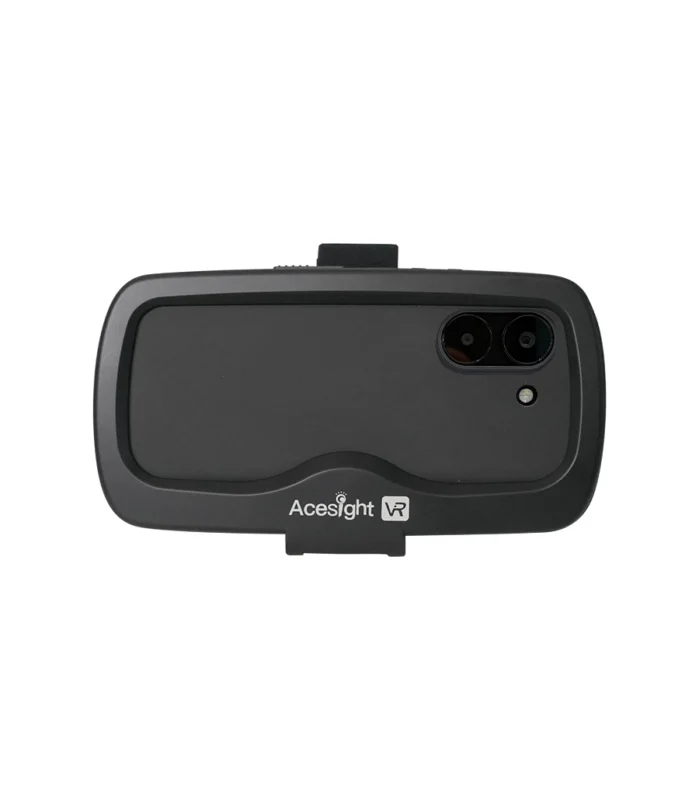
Acesight VR is a pair of high-end wearable electronic glasses for visual impairments. Watching TV with Acesight VR, you see a super large screen in front of your eyes with crystal-clear image. For those who enjoy TV shows or soaps, Acesight VR is absolutely the first and ultimate option! Doctors and institutions recommend this excellent product to low-vision users, as it not only allows users to sit comfortably on the sofa and watch TV from a distance, but also enables them to go watch ball games or movies in cinemas, and even serves as a visual aid in some workplaces due to its hands-free design.
Who May Benefit Most from Acesight VR?
If you’re nodding your head at any of these, Acesight VR could be the right fit for you:
A person with AMD who says, “I just want to see the characters’ faces again during my favorite drama.”
Low vision seniors who are sensitive to visual fatigue and get tired after wearing heavier devices for a short while.
Anyone who doesn’t enjoy dealing with complicated gadgets and values clear, straightforward controls.
Anyone who wants to rejoin family movie nights and enjoy TV alongside children or caregivers — rather than sitting apart from the group.
Not everyone needs the most elaborate AI system on the market. Very often, a device that’s more comfortable, simpler to use, and easier to stick with does more for your quality of life than a feature list that looks impressive on paper.
Final Thoughts: The Best Wearable Low Vision Device Is the One That Fits Your Life
There’s a huge selection of tv glasses for visually impaired and smart glasses for low vision out there, and the “right” choice depends entirely on what makes your life feel more whole.
Quick Recommendation by Need
- Choose OrCam MyEyeif your biggest challenge is reading printed text, identifying products, or using AI-powered assistance throughout the day. OrCam's core strength is text accessibility and information access.
- Choose eSight GOif you're looking for a highly customizable visual enhancement system and are comfortable investing time learning advanced features such as zoom controls, viewing modes, and personalized settings, and have the budget to match that level of versatility. eSight is designed as a versatile low-vision platform for work, school, home, and entertainment.
- Choose Zoomax Acesight VRif your primary goal is enjoying television, sports, movies, and everyday distance viewing with a comfortable, easy-to-use device that doesn't require extensive setup. Acesight VR is specifically positioned around TV viewing comfort, large field of view, and long-term wearability.
As you search for the best magnifying glasses for watching TV, remember: the device that truly changes your life is the one you’ll actually use – happily, easily, and for years to come.
Ready to make TV time feel like family time again? Visit the Zoomax USA online store for visually impaired today to explore the Acesight VR and discover how natural and comfortable watching your favorite shows can be. Your next movie night might just be the best one in years.
Frequently Asked Questions
What are the best magnifying glasses for watching TV?
The best devices are those designed specifically for distance viewing, comfort, and long-term wear, such as wearable low vision glasses with a wide field of view. Many users find that TV-focused devices provide a more natural experience than reading-focused AI glasses.
What makes TV glasses for visually impaired users effective?
Key factors include:
- Wide field of view
- Comfortable long-term wear
- Simple controls
- Low visual fatigue
- Stable image for moving content like sports and movies
Is Acesight VR suitable for daily TV watching?
Yes. Zoomax Acesight VR low vision glasses for watching TV are designed specifically for comfortable home entertainment, including movies, sports, and streaming content.
What is your purchase policy for Acesight VR?
We offer:
- 30-day trial period
- US warehouse shipping
- 2-year warranty coverage
- 10% discount for new user registration purchase
Disclaimer: This article mentions third-party products such as OrCam MyEye and eSight for informational and comparison purposes only. All product names, trademarks, and brands belong to their respective owners. Product features and specifications may vary over time. Please refer to the official manufacturers’ websites for the most up-to-date information.
We are committed to helping users choose the most suitable low vision assistive technology based on real-life usage scenarios.