









Nutritional Supplements for Age-Related Macular Degeneration

If you’ve been diagnosed with age-related macular degeneration (AMD), you’re probably looking for practical ways to protect your vision and stay independent for as long as possible. The good news is that you’re not alone — and there are steps you can take today that may help support your eye health.
For many people living with AMD, that includes talking with their eye doctor about nutritional supplements, maintaining healthy lifestyle habits, and using digital magnifiers like Zoomax Luna 8 that make daily tasks easier and more enjoyable.
Understanding Age-Related Macular Degeneration
Age-related macular degeneration is a common eye condition that affects the macula, the central part of the retina responsible for sharp, detailed vision. As AMD progresses, activities that once felt simple can become more challenging.
Imagine stepping into a busy medical building for your eye appointment. You glance up at the lobby directory, trying to find which floor the ophthalmology department is on, but the letters blur into a fog. You feel a small knot of anxiety — you don’t want to bother a stranger, yet you can’t find your way on your own.
Or picture yourself in the supplement aisle at the grocery store, holding two bottles. The labels are too tiny and the lighting too dim for you to compare the ingredients, so you end up guessing or simply putting both back.
These everyday reading challenges are common among people with AMD and are often related to reduced central vision clarity rather than complete vision loss. It is important to note that AMD does not usually cause total blindness, and many people continue to live active and independent lives with appropriate support.
Research funded by the National Eye Institute has shown that early intervention and proper management can play an important role in slowing disease progression for certain AMD patients.
Can Nutrition Help Support Eye Health in AMD?
When discussing nutrition for age-related macular degeneration, several key nutrients are frequently mentioned because of their role in supporting retinal health.
Key Nutrients for Macular Degeneration (AREDS2-Based Nutrients)
Lutein and Zeaxanthin
These carotenoids are naturally found in the retina and may help filter harmful blue light while supporting the macula’s protective functions. The AREDS2 study incorporated lutein and zeaxanthin after research suggested benefits for people at risk of advanced AMD.
Vitamin C and Vitamin E
These antioxidants help protect cells from oxidative stress, which is believed to contribute to age-related eye damage.
Zinc
Zinc plays an important role in retinal function and was included in both the AREDS and AREDS2 formulations.
Omega-3 Fatty Acids
Omega-3s are essential fatty acids found in foods. They are well-known for supporting overall heart health and maintaining healthy eyes.
Key Eye Nutrients & Everyday Food Sources
Nutrient | What It Supports | Common Food Examples (2–3 practical options) |
Lutein & Zeaxanthin | Help support macular pigment and filter high-energy blue light | Spinach, kale, eggs |
Vitamin C & Vitamin E | Support antioxidant protection for eye cells and overall retinal health | Oranges, bell peppers, almonds |
Zinc | Helps support normal retinal function and visual processing | Oysters, beef, pumpkin seeds |
Omega-3 Fatty Acids | Support overall eye comfort and retinal health | Salmon, sardines, walnuts |
Together, these macular degeneration nutrients help support overall eye health and can be incorporated into your daily routine in simple, enjoyable ways. Try adding spinach, kale, or collard greens to your morning smoothie, tossing carrots, bell peppers, or sweet potatoes into your lunch or dinner, and enjoying salmon, tuna, or sardines a few times a week. Even small habits—like blending a quick green juice with spinach, cucumber, and orange—can help you get these nutrients consistently while keeping meals tasty and convenient.
If you’re a family member or caregiver, you can play a key role by helping plan weekly menus around these eye-healthy ingredients, prepping chopped vegetables in advance, or batch-cooking simple meals that make daily nutrition easier for your loved one — and less stressful for you.
Do AMD Supplements Really Work?
One challenge many older adults face is maintaining consistent nutrition every day.
Even when you know that spinach, kale, salmon, and other nutrient-rich foods are good for your eyes, preparing those foods regularly isn’t always easy.
That’s why many people discuss nutritional supplements for AMD with their eye care provider.
Supplements can fit naturally into an existing routine:
- Taking a supplement with breakfast
- Keeping it next to your morning coffee maker
- Adding it to your daily medication organizer
- Bringing it along when traveling
The convenience matters. Instead of making major changes overnight, small daily habits can feel more manageable and sustainable.
For caregivers, supplements can also offer peace of mind. Knowing that a loved one is consistently getting key nutrients may help simplify part of their daily care routine.
It’s important to remember that supplements are not a cure for AMD and cannot restore lost vision. Clinical studies, including the AREDS2 trial supported by the National Eye Institute, suggest that specific formulations may help slow progression in certain individuals with intermediate or advanced AMD.
However, it is important to remember:
AMD supplements are not a cure and cannot restore lost vision.
How to Choose the Right AMD Supplement
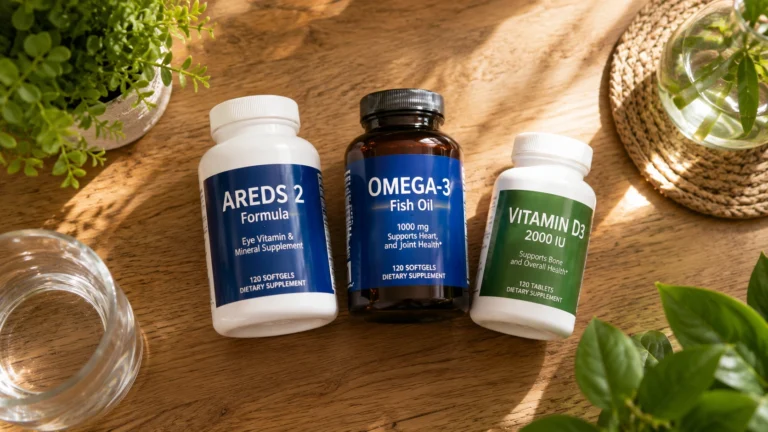
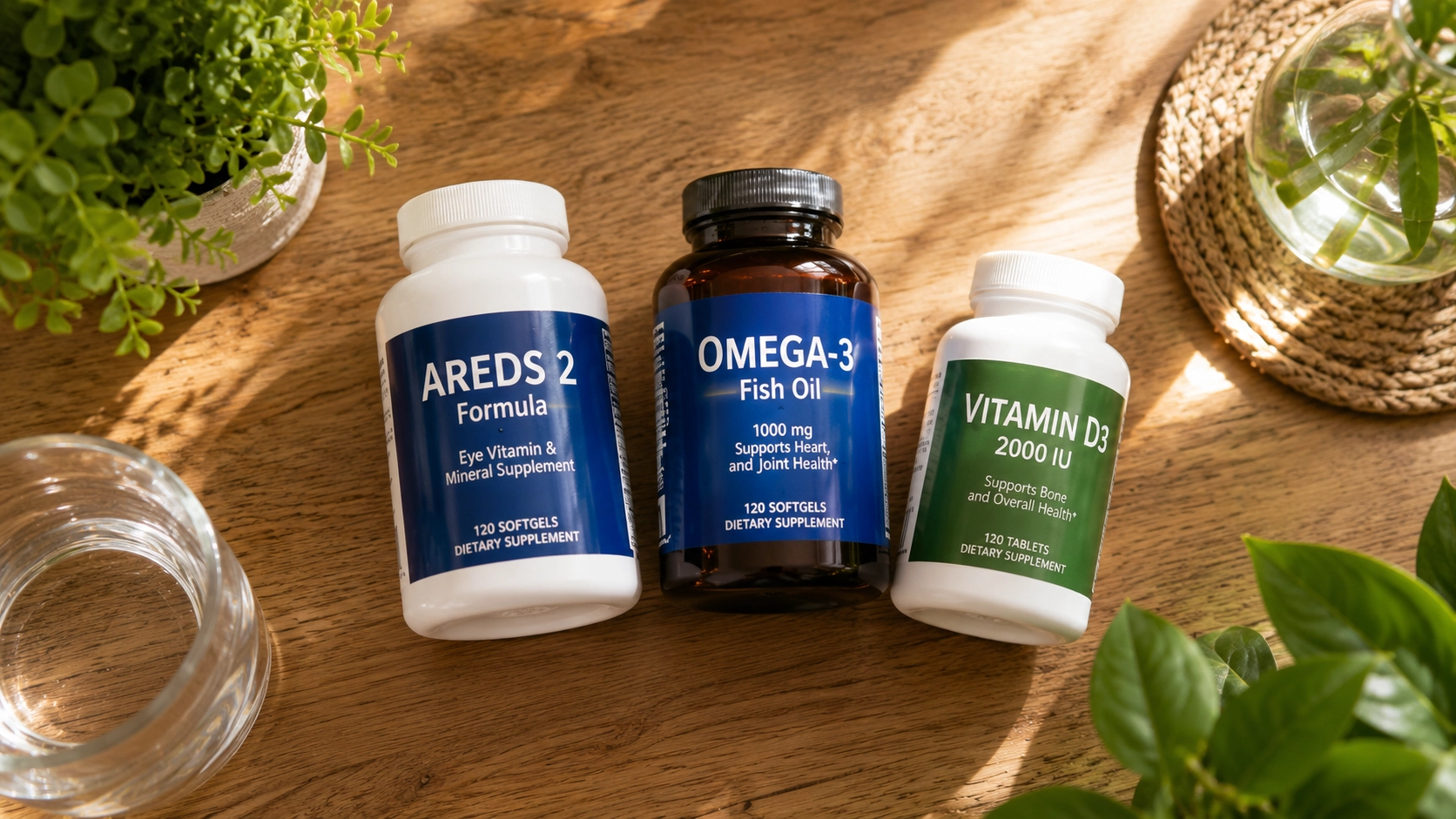
Not all eye health supplements are the same. When evaluating options, consider the following:
Look for AREDS2-Based Formulations
Many eye doctors recommend supplements that follow the AREDS2 formula studied by the National Eye Institute.
Check the Ingredient List
Look for ingredients such as:
- Lutein
- Zeaxanthin
- Vitamin C
- Vitamin E
- Zinc
- Copper
These nutrients are commonly associated with AREDS2 formulations.
Consider Ease of Use
Choose a format that fits your routine, whether that’s softgels, capsules, or other options.
❗️Talk With Your Eye Doctor
Every person’s situation is different. This article is for educational purposes only and should not replace professional medical advice. Always consult your ophthalmologist, optometrist, or healthcare provider before starting any new supplement.
Supplements are a long-term investment in your macular health — but they can’t help you read a tiny label or a blurry street sign right now. That’s where low vision devices come in.
How Low Vision Devices Support Daily Life with AMD
Nutritional supplements may help slow the progression of AMD over time, but they don’t instantly solve the everyday frustration of reading small print or recognizing distant signs. To protect your eyes for the long term while making daily life easier today, pairing a portable low vision digital magnifier with your supplement routine is a more complete approach. Low vision devices do not treat AMD, but they can help make reading and daily activities more accessible.
Boost Your Daily Life with Zoomax Luna 8
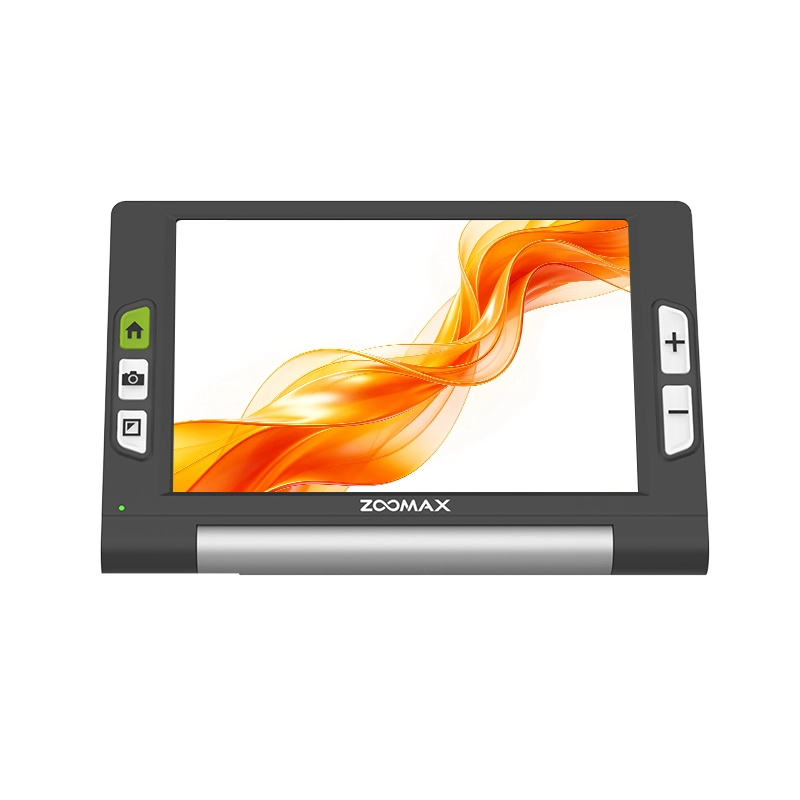
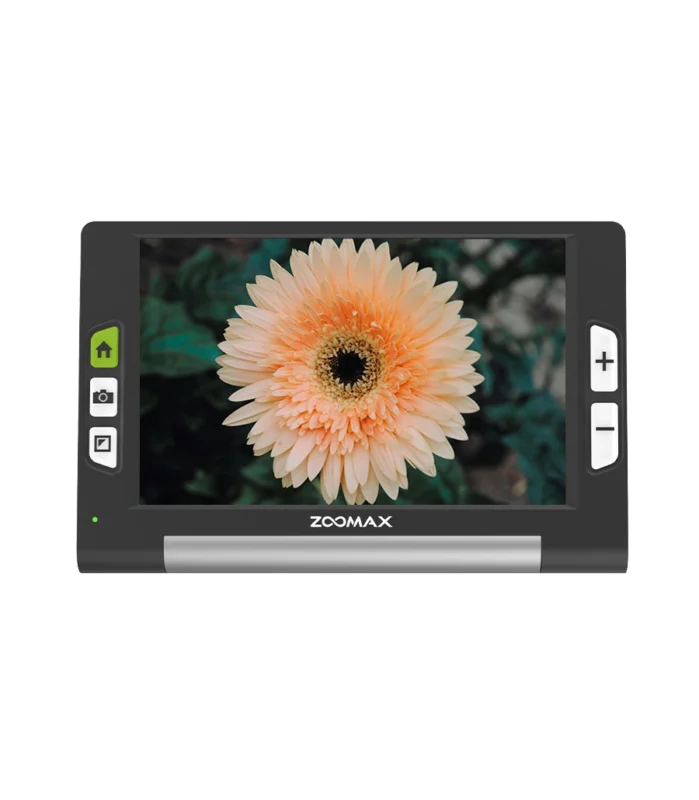
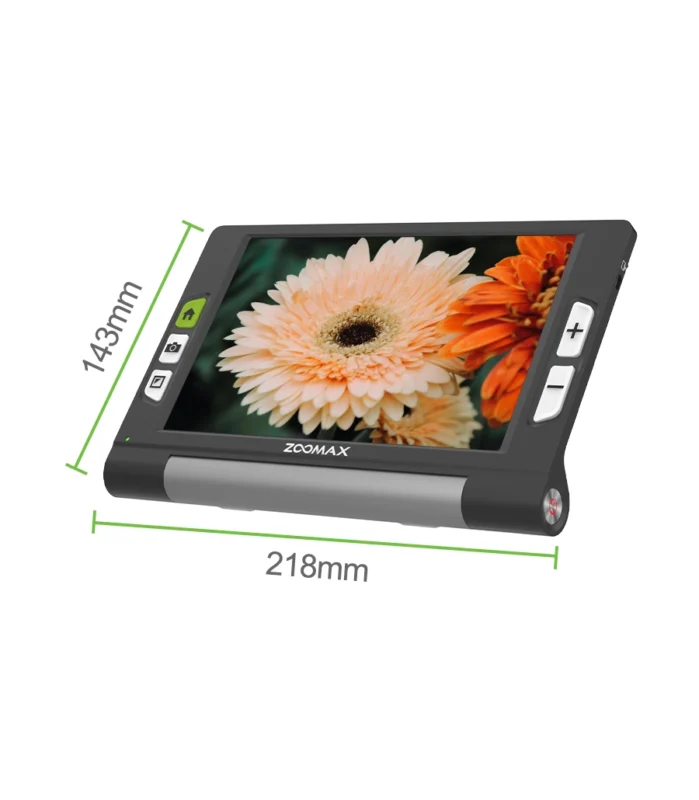
Think back to that moment in the pharmacy aisle, or the blurry hospital directory we talked about. That’s exactly where the Zoomax Luna 8 steps in. It’s an 8.0 inch portable digital video magnifier for macular degeneration designed to move through the day with you — just slip it out of your bag, and you instantly have a bright, clear window to the world.
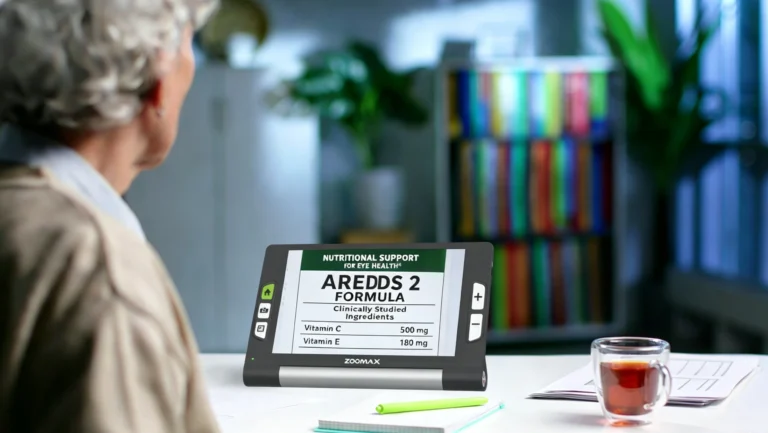
Its 8-inch screen brings every detail into focus, and the 8-hour battery life means you can head out for appointments, shopping, or a long lunch without worrying about recharging. No squinting at tiny print, no tapping a stranger on the shoulder, no feeling stuck. Whether you’re comparing supplement facts, reading a bus schedule, or finding the right floor at the eye clinic, everything becomes simple and readable again.
Luna 8 handheld digital magnifier is ready to use right out of the box — no confusing menus, no calling your grandkids for tech support. The buttons are large and intuitive, so you’re up and running in seconds. Unlike many reading devices for macular degeneration that keep you tied to a desk at home, this one fits neatly into your active life.
More than a magnifier, it’s about quiet confidence. Handling a routine errand completely on your own can lift your whole day. When you don’t have to rely on someone else just to read a label or a sign, you reclaim a small piece of independence — and that feels genuinely wonderful. For families and caregivers, providing a portable magnifier like Luna 8 means less worry when your loved one goes out alone — they can read signs, menus, and labels on their own, which reduces the daily caregiving load and gives everyone greater peace of mind.
If you’re exploring low vision aids for macular degeneration that truly support your everyday freedom, pairing good nutrition with the right tool makes a real, noticeable difference.
Luna 8
Rated 5.00 out of 5
$955.00
Luna 8 is a digital magnifier with an 8-hour extra-long battery life. With long-lasting battery life, a mere 500g in weight, and an 8-inch large screen, Luna 8 is highly portable for all-day outdoor use. Additionally, Luna 8 is loved by low-vision users for its sleek design and large, high-contrast tactile buttons. When using Luna 8 to read books, you will see more content on the screen compared with other small-sized visual aids. Thus, whether reading a restaurant menu or library books, just take Luna 8 out of your bag—it’s a convenient reading companion for everyday use!
Caring for Your Eyes, Caring for Your Life
Living with AMD is about more than managing a medical condition.
It’s about protecting the activities, relationships, and moments that bring joy to your life.
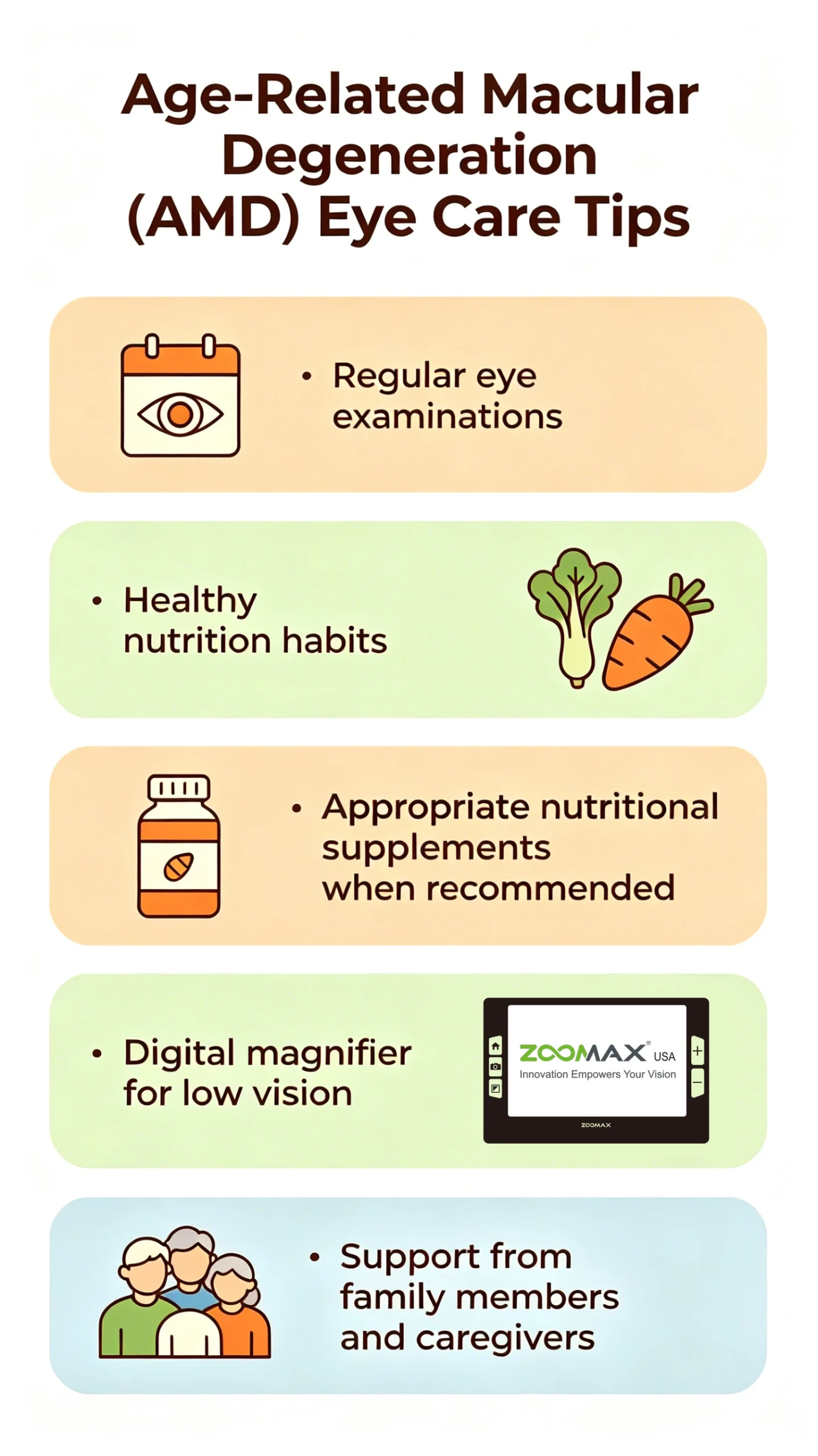
A comprehensive approach often includes:
- Regular eye examinations
- Healthy nutrition habits
- Appropriate nutritional supplementswhen recommended
- Digital magnifierfor low vision
- Support from family members and caregivers
Small daily steps can make a meaningful difference over time.
Whether it’s discussing supplements with your eye doctor, scheduling your next eye exam, or finding the right reading aids for macular degeneration, every positive action helps support your independence and quality of life.
Explore Zoomax USA low vision aid store to discover more digital magnifiers that are designed for macular degeneration and other vision challenges.
Frequently Asked Questions
Can nutritional supplements cure AMD?
No. AMD supplements cannot cure or reverse vision loss, but AREDS2-based formulations may help slow disease progression in certain patients.
What is the best supplement for age-related macular degeneration?
Most eye doctors recommend AREDS2-formulated supplements, which typically include lutein, zeaxanthin, zinc, vitamins C and E.
How long should I take AMD supplements?
Many patients take them long-term as part of daily eye health management, but you should always follow your eye doctor’s recommendation.
Can I use supplements together with low vision devices?
Yes. Many people combine nutritional supplements with low vision aids like portable magnifiers to support both eye health and daily independence.
If I decide to purchase the Zoomax Luna 8, what is included in your purchase policy?
We make it simple and risk-free to try. Every order includes:
● 30-day trial period
● U.S. warehouse shipping
● 2-year warranty
● 10% off for new user registration
References
- National Eye Institute – AREDS/AREDS2 Clinical Trials
- National Eye Institute – AREDS 2 Supplements for AMD
- National Eye Institute – AREDS/AREDS2 FAQ